

Technology rarely moves in a straight line. It accelerates, collides with regulation, reshapes industries, and quietly rewrites how daily life functions. Over the next five years, the pace of change will intensify across artificial intelligence, computing, sustainability, healthcare, cybersecurity, and connectivity.
Global research from organizations like the World Economic Forum and McKinsey & Company consistently highlights how digital transformation is no longer optional. It is becoming the foundation of economic growth, national security, and business competitiveness.
This comprehensive guide explores the most important upcoming technology trends for the next five years, explaining what they are, why they matter, and how businesses and individuals can prepare.
1. Artificial Intelligence Becomes Infrastructure

Artificial Intelligence (AI) is transitioning from a productivity tool to a foundational layer of digital infrastructure.
According to research from Gartner, AI adoption in enterprises is expected to more than double in the coming years, especially in areas like automation, predictive analytics, and decision intelligence.
What’s Changing
- AI copilots embedded in enterprise software
- AI-powered customer service replacing traditional chatbots
- Automated coding and software testing
- Autonomous decision systems in finance and logistics
The next five years will see AI integrated into:
- Supply chain forecasting
- Drug discovery
- Fraud detection
- Marketing personalization
- Manufacturing optimization
The IBM Global AI Adoption Index shows that organizations investing in AI report measurable improvements in cost efficiency and operational speed.
Why It Matters
AI will not just enhance productivity; it will redefine competitive advantage. Companies that fail to embed AI into workflows risk becoming operationally outdated.
2. The Rise of Generative AI Across Industries

Generative AI, capable of producing text, images, code, and video, is expanding beyond experimentation.
Research from McKinsey’s generative AI report estimates trillions of dollars in potential annual economic impact.
Key Applications
- Automated content creation for marketing
- AI-assisted legal document drafting
- Synthetic training data for machine learning
- AI-driven product design
However, ethical considerations are equally critical. Organizations like the OECD AI Policy Observatory emphasize responsible AI frameworks, bias mitigation, and transparency.
The Five-Year Outlook
Generative AI will move from novelty to workflow integration, becoming standard in:
- Education platforms
- Enterprise documentation
- Creative industries
- Software engineering
3. Quantum Computing Moves Toward Commercial Reality

Quantum computing is no longer purely theoretical. Companies and research institutions are advancing hardware stability and error correction.
The Nature journal on quantum computing frequently documents breakthroughs in qubit performance and coherence times.
What Quantum Will Impact
- Pharmaceutical simulations
- Climate modeling
- Cryptography
- Financial modeling
While large-scale quantum advantage may still be years away, hybrid classical-quantum systems will emerge within five years.
Governments worldwide are investing heavily, including initiatives documented by the White House Office of Science and Technology Policy.
4. Cybersecurity Becomes AI-Driven and Proactive

Cyber threats are growing in sophistication. The next phase of cybersecurity will rely heavily on AI-driven detection.
According to insights from CISA (Cybersecurity and Infrastructure Security Agency), proactive threat detection and zero-trust architecture will define modern security models.
Emerging Trends
- Zero-trust security frameworks
- AI anomaly detection
- Post-quantum cryptography
- Biometric authentication
The next five years will see cybersecurity embedded into software development pipelines, rather than added as an afterthought.
5. 5G Expansion and the Path to 6G

5G networks are still expanding globally, but research into 6G is already underway.
The International Telecommunication Union highlights 6G’s potential for ultra-low latency and high bandwidth connectivity.
What This Enables
- Smart cities
- Autonomous vehicles
- Real-time remote surgery
- Industrial IoT automation
Connectivity will become the backbone of next-generation innovation.
Technology Trends Comparison Table (2026–2031)
| Technology Trend | Main Impact Area | Adoption Speed | Business Risk If Ignored | Long-Term Potential |
|---|---|---|---|---|
| Artificial Intelligence | Enterprise operations | Very High | High | Transformational |
| Generative AI | Creative & Knowledge | Very High | High | Disruptive |
| Quantum Computing | Scientific research | Moderate | Medium | Revolutionary |
| Cybersecurity AI | Data protection | High | Critical | Essential |
| 5G/6G Connectivity | Infrastructure | High | High | Foundational |
| Green Tech & Clean Energy | Sustainability | High | Strategic | Essential |
| Biotech & Digital Health | Healthcare | Moderate | Medium | Transformational |
6. Green Technology and Climate Innovation

Climate technology is entering a scaling phase. Reports from the International Energy Agency show rapid growth in renewable energy adoption.
Major Developments
- Green hydrogen production
- Advanced battery storage
- Carbon capture technology
- Electrification of transport
Governments and corporations are committing to net-zero goals, accelerating clean technology investment.
7. Biotechnology and AI-Driven Healthcare
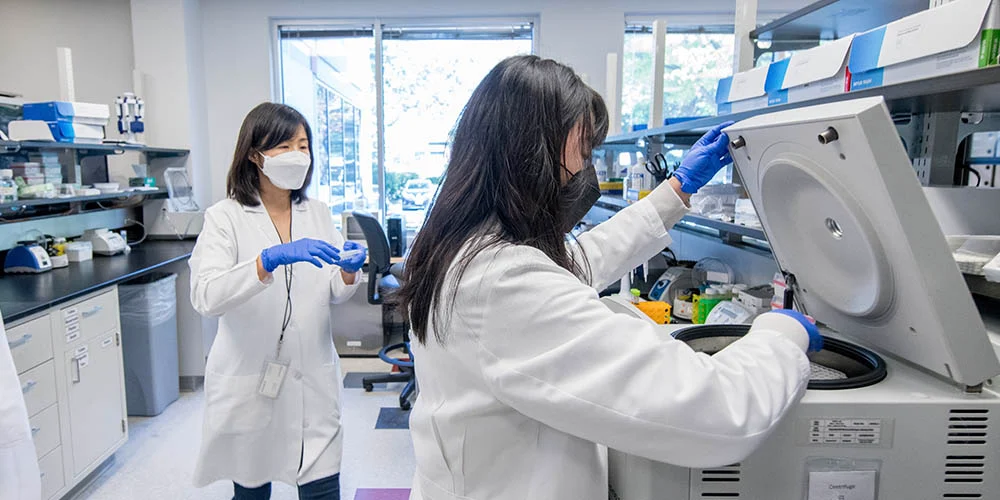
Healthcare innovation will accelerate through AI-powered diagnostics and genomics.
The National Institutes of Health continues to publish research on precision medicine and AI-assisted diagnostics.
Expected Advancements
- Personalized treatment plans
- AI-assisted radiology
- Remote patient monitoring
- Gene-editing technologies
Digital health platforms will integrate wearable data with predictive analytics.
8. Extended Reality (XR) and Spatial Computing

Virtual, augmented, and mixed reality technologies are moving beyond gaming.
Enterprise adoption is growing in:
- Workforce training
- Virtual collaboration
- Industrial design
- Education
Spatial computing will reshape digital interaction, making immersive interfaces more practical and productive.
9. Robotics and Automation Expansion

Automation is expanding into logistics, manufacturing, and service industries.
Robotics combined with AI allows:
- Fully automated warehouses
- Precision agriculture
- Autonomous delivery systems
- Smart factories
The next five years will see smaller, more adaptive robots entering mainstream operations.
How Businesses and Individuals Should Prepare
For Businesses
- Invest in AI literacy across teams
- Upgrade cybersecurity frameworks
- Monitor regulatory shifts
- Build data governance systems
- Adopt sustainable technology practices
For Professionals
- Develop digital fluency
- Learn AI-assisted productivity tools
- Stay updated through credible sources
- Build cross-disciplinary skills
The World Economic Forum Future of Jobs Report outlines skills that will dominate the next decade.
Frequently Asked Questions (FAQ)
1. Which technology will grow the fastest in the next five years?
Artificial Intelligence and generative AI are expected to experience the fastest adoption due to immediate productivity benefits and enterprise demand.
2. Will quantum computing replace classical computers?
No. Quantum computing will complement classical systems, especially for complex simulations and cryptographic tasks.
3. Is 6G really coming soon?
6G is currently in research stages. Commercial deployment is likely after 2030, but foundational research will accelerate over the next five years.
4. How will AI affect jobs?
AI will automate repetitive tasks but create demand for new skills such as AI oversight, data governance, and machine learning operations.
5. What industries will benefit most?
Healthcare, finance, manufacturing, energy, and logistics are positioned for major transformation.
Final Thoughts: The Next Five Years Will Redefine Digital Reality
The coming five years will not be defined by a single breakthrough, but by convergence. Artificial intelligence will merge with biotechnology. Quantum research will influence cybersecurity. Green technology will reshape industrial infrastructure. Connectivity will tie everything together.
Technology adoption is no longer optional. It is a strategic necessity for governments, corporations, and individuals.
Those who monitor credible research, invest in adaptable skills, and align with responsible innovation frameworks will navigate this transformation successfully.
The future is not a distant concept—it is unfolding now, embedded in code, chips, clean energy systems, and data models shaping everyday decisions.
Understanding these trends today means being prepared for the world of 2031.